
OLED Displays
0.91'' Monochrome 128x32 SPI OLED Graphic Display Module
Model / SKU: GFOP0.91-12832NTV1
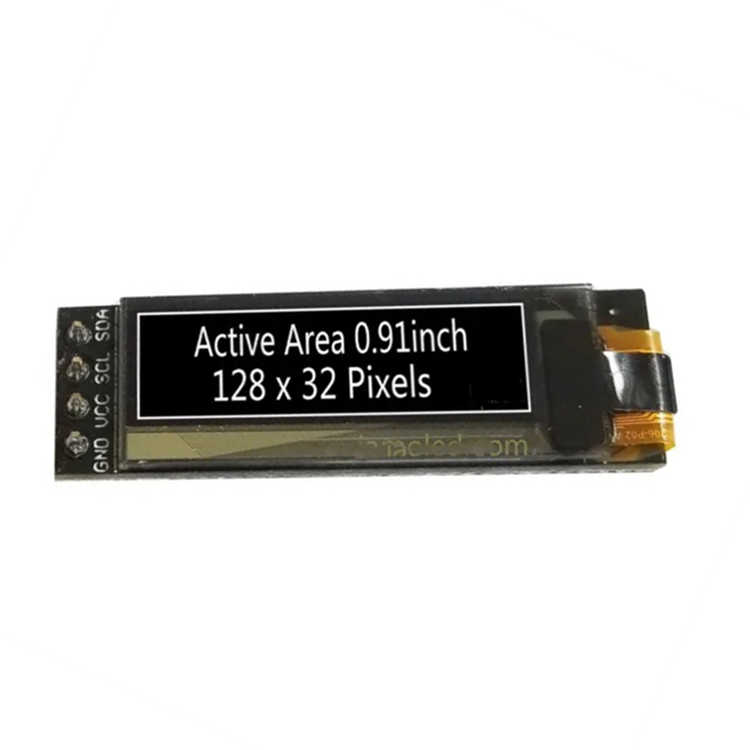
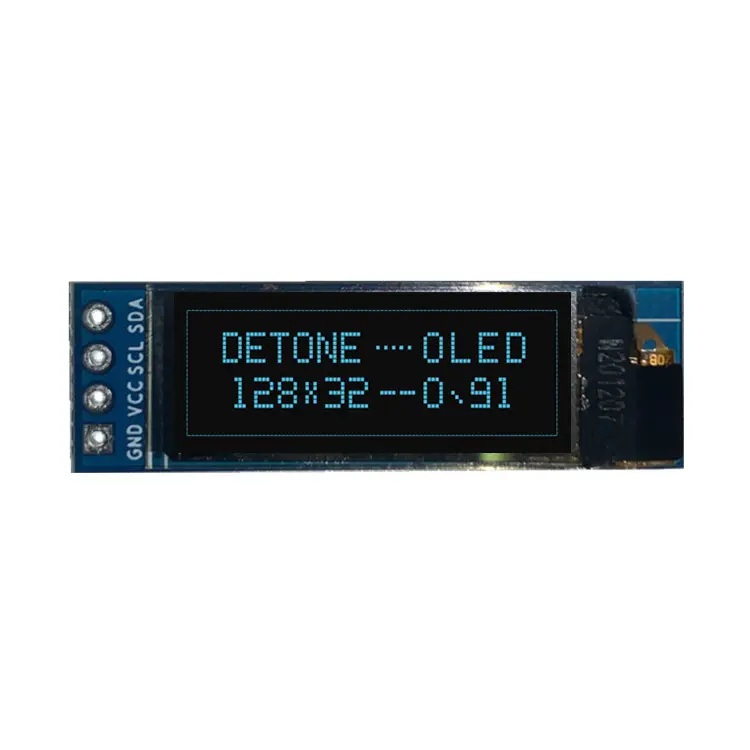
This 0.91'' Monochrome 128x32 SPI OLED Graphic Display is thinner, better than an LCD. You can easily connect it to projects and devices with SPI Interface.
- Display Mode
- PMOLED (Passive Matrix) Graphic
- Resolution
- 128 x 32 pixels
- Active Area WxH (mm)
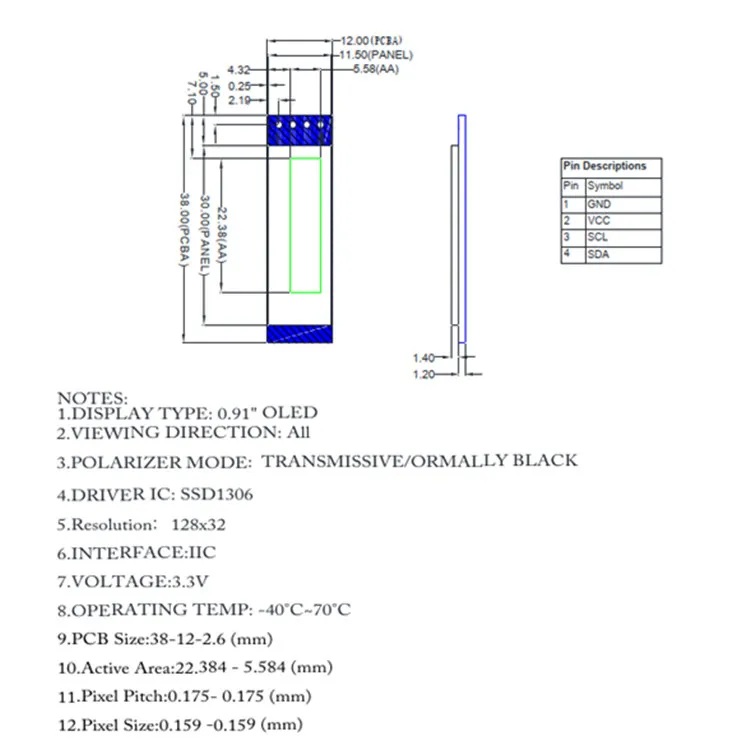
- 22.384 x 5.584
- Interface Type
- 4-wrie SPI, I2C Interface
Need another size, interface or touch option? Explore customization.
Technical specifications
| Model / Series Name | GFOP0.91-12832NTV1 |
|---|---|
| Screen Size (Inches) | 0.91'' |
| Display Mode | PMOLED (Passive Matrix) Graphic |
| Resolution | 128 x 32 pixels |
| Display Color | White, Blue Optional |
| Module Size WxHxD (mm) | 12.00 x 38.00 x 2.40 |
| Active Area WxH (mm) | 22.384 x 5.584 |
| Driver IC | SSD1306 |
| Drive Duty | 1/32 Duty |
| Interface Type | 4-wrie SPI, I2C Interface |
| Operating Voltage | 3.3V/5V |
| Operating Temperature | -30 ~ +70ºC |
| Storage Temperature | -40 ~ +80ºC |
Description & drawings
Product highlights
Monochrome 128x32 SPI OLED Graphic Display Modules are popular OLED parts in many communities, like Adafruit and Waveshare.
As an OLED manufacturer, Go2Display supplies wholesale OLED display modules at factory prices.
If you have a unique requirement, a custom OLED module solution is also available.
Product description
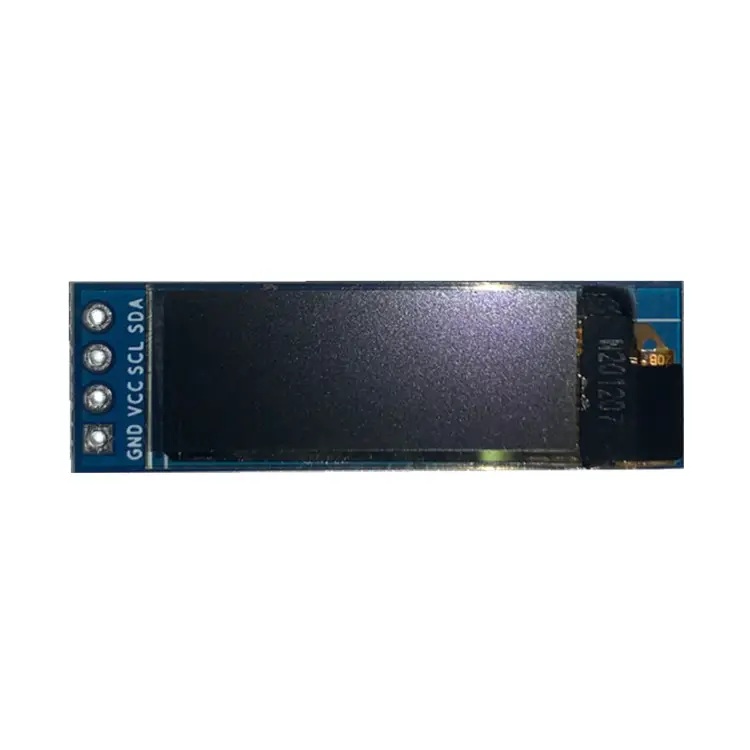
This 128x32 OLED Graphic Display is a monochrome OLED Module with a 0.91 inch PMOLED panel / 128x32 resolution Screen / 4-wire SPI Interface /SSD1306 Controller / COG with PCBA.
The high quality, low price product is always our long-term goal.
Technical Details
Download Product References Below
Product Datasheet: GFOP0.91-12832NTV1
Control IC Datasheet: SSD1306
0.91” Monochrome OLED Graphic Display Module Datasheet
More Details
This Mono OLED display module has a micro screen of 0.91 inches, but it is easy to read because of its high contrast. It is with a 128x32 solution. Since an OLED display makes its own light, there is no need for a backlight. That reduces the amount of power. Each black pixel is really off. That is why the display has such high contrast.
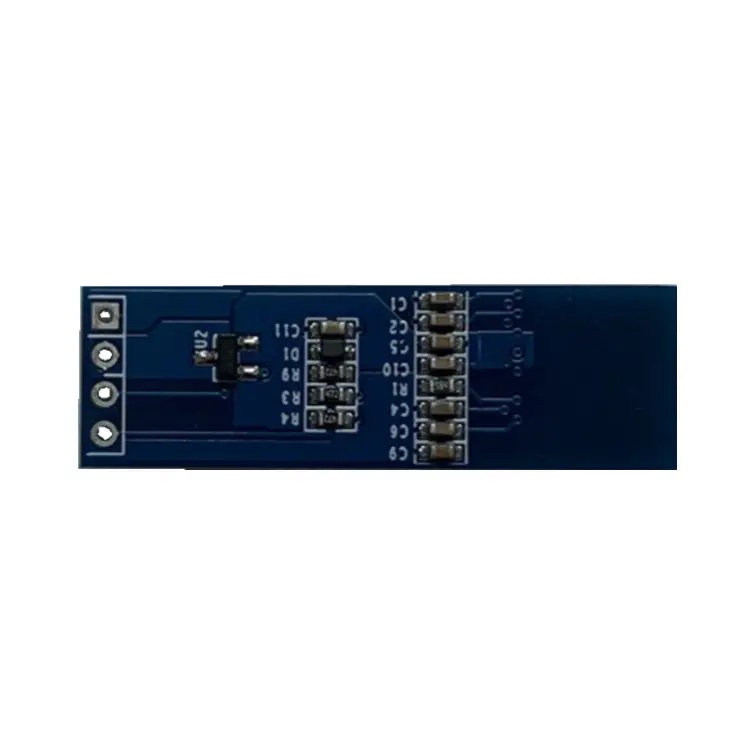
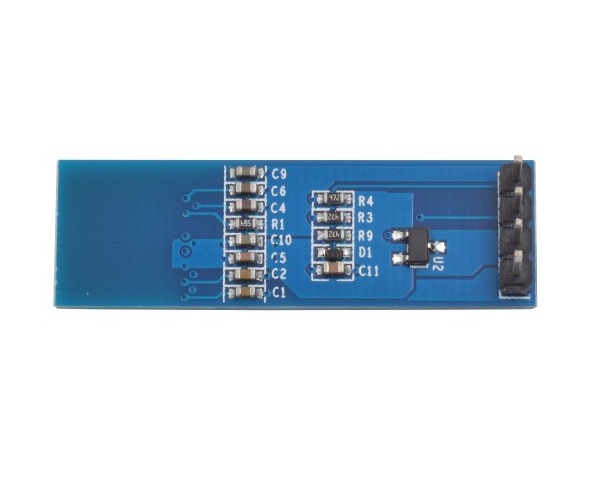
You can use SPI to contact IC SSD1306. Meanwhile, we can also use I2C by moving the SPI resistor to the I2C position on the back.
We wouldn’t just give you a datasheet and say, “good luck”. You can get the Arduino library for the SSD1306 OLED display from GitHub. The library comes with example codes. Text, bitmaps, pixels, rectangles, circles, and lines can all be printed from the library.
You’ll need a microcontroller with more than 512 bytes of RAM to buffer the whole screen.
It works very quickly. It is easy to change the code to work with any other microcontroller.
The OLED needs 3.3V logic power supplied to work. An additional 3.3v regulator and level shifter can also make it work with any 5V microcontroller, like the Arduino.
Remember that OLED displays have thousands of OLEDs. Each pixel is a little organic LED. If you want the display always to be the same brightness, please turn off the display (set the pixels off) when you don’t need it.
Custom OLED Display Service
All of our displays come with a warranty that lasts for a year. ISO 9001:2001 and RoHS compliance ensure products are of high quality.
Suppose your project or product needs a unique OLED display module. Call us today for a custom OLED display solution.
Additional information
| Resolution | 240×240 |
|---|---|
| Interface | Parallel, MCU, SPI, RGB |
| Touch screen | None |
Related products
More mono oled display modules →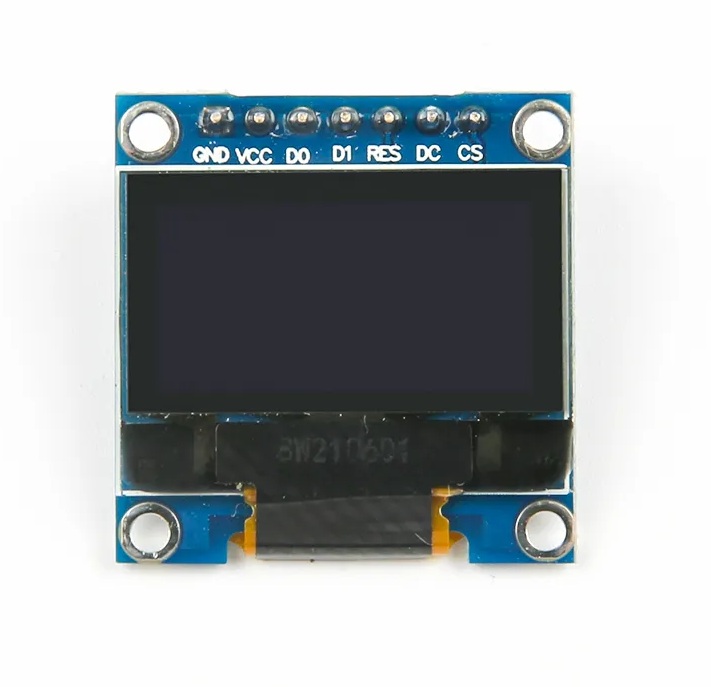
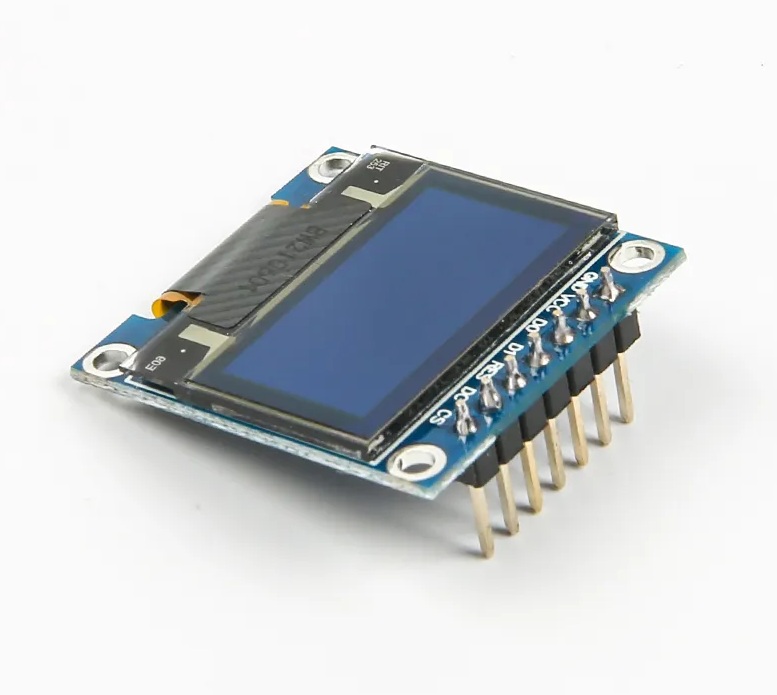
OLED Displays
Monochrome 0.96'' 128x64 OLED Graphic Display Module
GFOA12864NT
View specifications →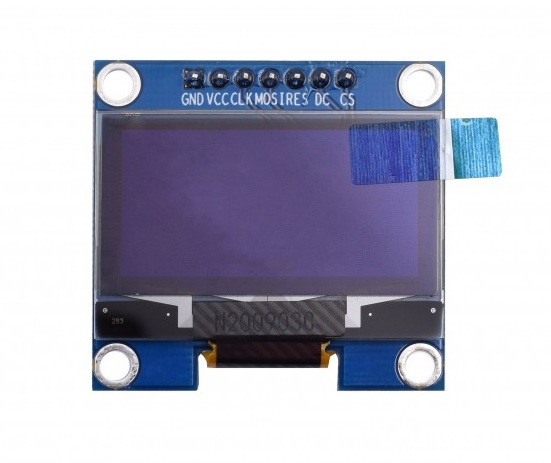
OLED Displays
Monochrome 1.3'' 128x64 OLED Graphic Display Module
GFOP1.3-12864NT
View specifications →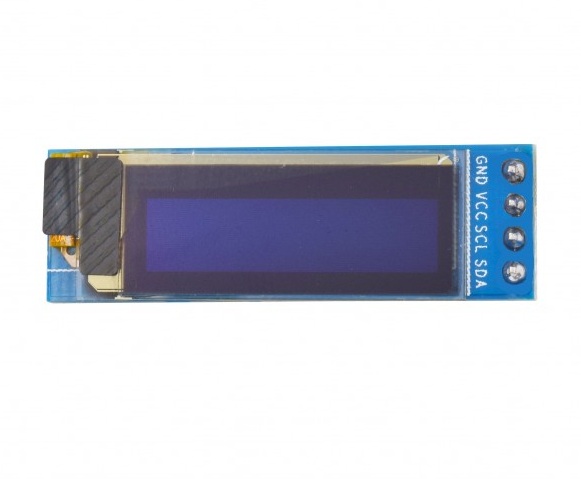
OLED Displays
Monochrome 128x32 I2C OLED Graphic Display Supplier
GFOP0.91-12832NT
View specifications →